
“Misschien is dat wat de kerk kan zijn voor jonge mensen: een plek om je thuis te voelen’“
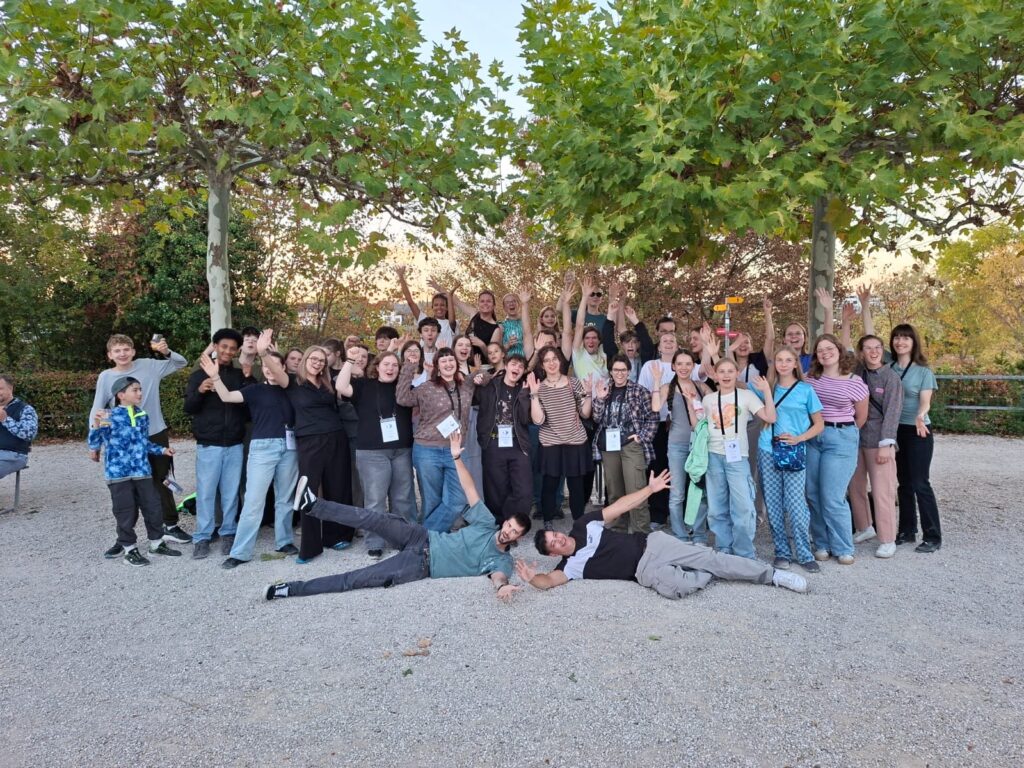
Van 24 t/m 27 september vond het Internationaal Oud-Katholiek Congres plaats in Rheinfelden (Zwitserland). Eens per vier jaar wordt dit congres georganiseerd. Voor jongeren is er simultaan een congres met een eigen programma waaraan ditmaal jongeren uit Zwitserland, Duitsland, Slowakije en Nederland aan deelnamen.
Uit Nederland kwamen er 11 jongeren uit diverse parochies mee, onder leiding van begeleiders Inge Toorman en jongerenpastor Thelma Schoon.
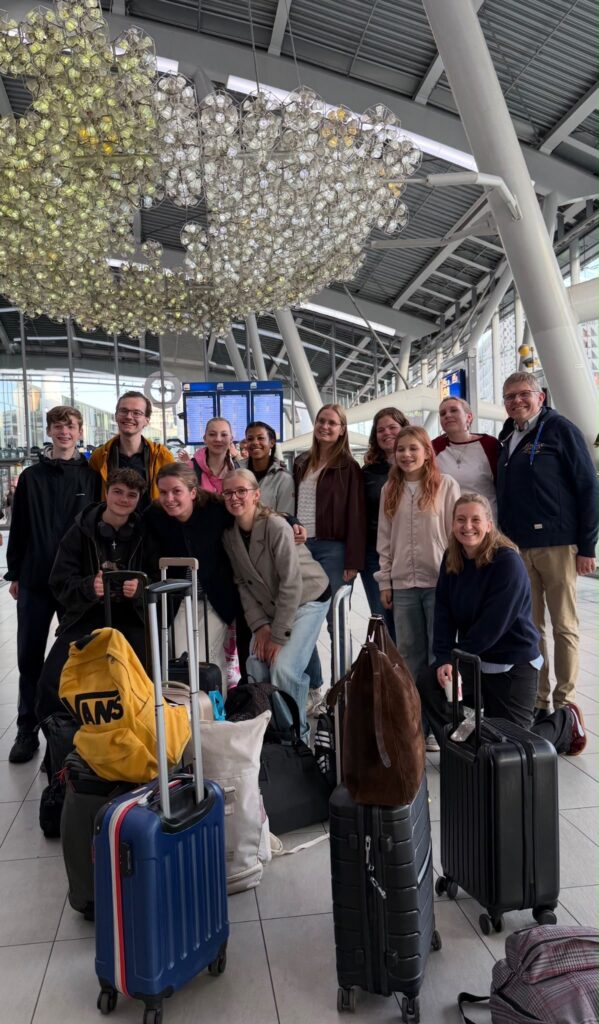
In de vroege morgen van donderdag verzamelde de groep zich op Utrecht Centraal, alwaar de lange treinreis vertrok naar het zuiden. Heel wat spelletjes, snoepjes en slaapjes later arriveerden we in het idyllische Rheinfelden waar we meteen de kerk inrolden voor het avondgebed.
De volgende morgen konden we rustig opstarten; we brachten een bezoek aan een spa in de buurt. Rheinfelden staat bekend om haar zoutwinning en dus dobberden de jongeren ’s morgens rustig rond in allerlei zoutbaden en sauna’s. ’s Middags was het tijd voor wat spellen om de andere jongeren beter te leren kennen en na het diner spraken verschillende jongeren zelfgeschreven voorbeden uit tijdens de dienst van de Unie van Utrecht.
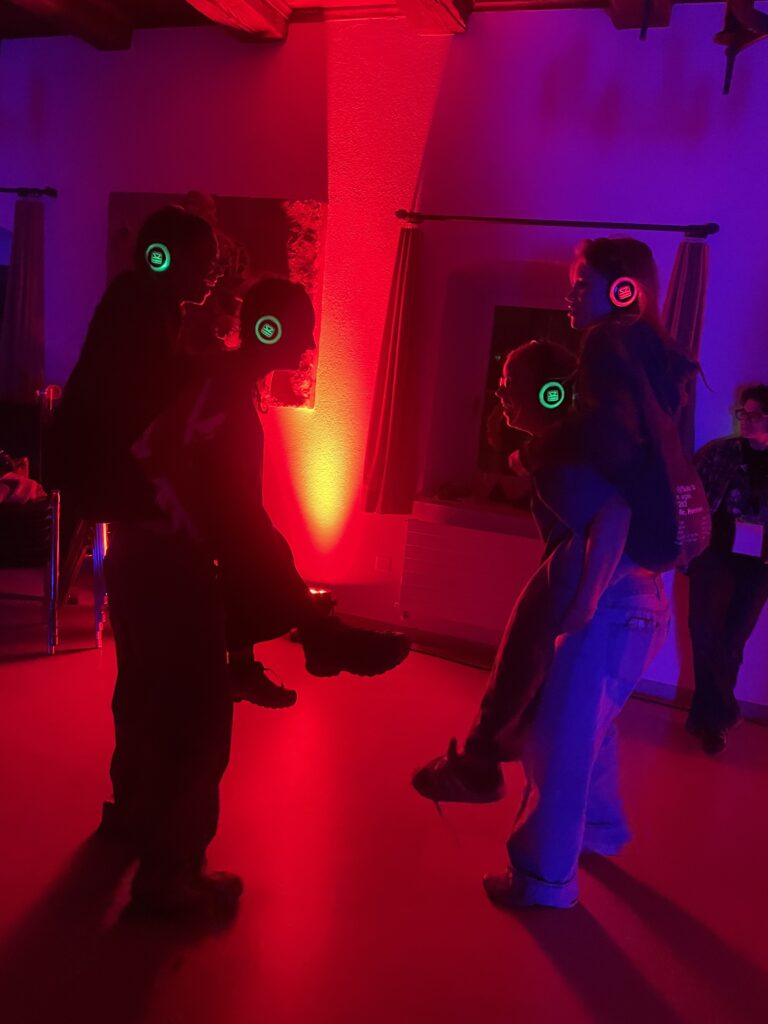
Terwijl de volwassenen zich daarna laafden aan de herderlijke brieven van bisschop Herzog, gebundeld in een pas verschenen boek, gingen bij de jongeren de voetjes van de vloer tijdens een silent disco. Helaas kon de gedraaide muziek de Nederlandse jeugd niet geheel bekoren, en stonden uiteindelijk alleen de begeleiders nog met de heupen te swingen.
Op zaterdag was het hoog tijd voor wat verdieping. De ochtend stond in het kader van ‘open space’, waarbij men onderwerpen kon aandragen die hen aan het hart ging. Vervolgens vormden deze onderwerpen de thema’s voor gespreksgroepen. Een groot deel van de jongeren sloot aan bij een gesprek over het belang van jongeren voor de kerk. Samen dacht men kritisch na over de vraag hoe de kerk jongeren beter zou kunnen ondersteunen en voorzien in behoeftes van de jongeren die er nú zijn in lokale parochies.
’s Middags mochten de jongeren hun visie en gevoel vervatten in een creatieve vorm. Waarom is de kerk eigenlijk zo belangrijk? En wat zijn de momenten dat zij zichzelf werkelijk thuis en verbonden voelden in de kerk?
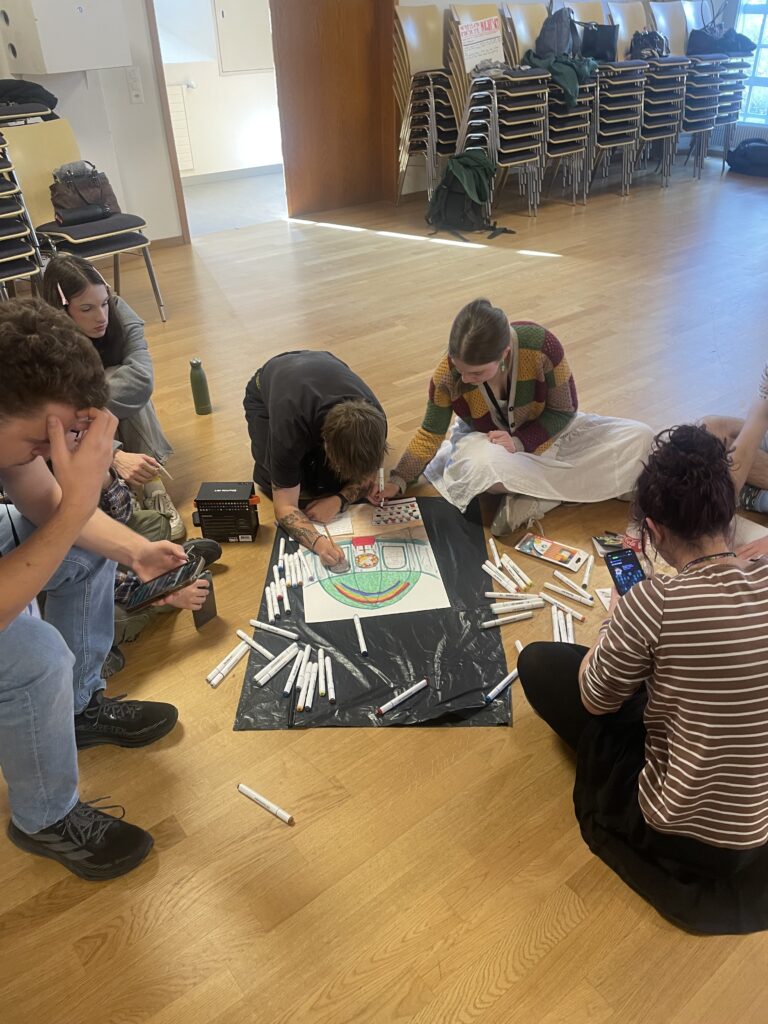
Tijdens het diner werden de resultaten getoond in en aan de zaal: er waren tekeningen en schilderijen, graffiti en gedichten. De zaal luisterde vol verwondering naar de remix van gregoriaanse muziek met beat, gemaakt door Jessie, en men klapte vrolijk mee op de videoclip van Philippa, Bobbie, Fleur en Deborah op ‘Born This Way’ van Lady Gaga, gemaakt om men een hart onder de riem te steken na het recente onderzoek dat de acceptatie van de LHBTIQ+ gemeenschap onder Nederlandse jongeren is gehalveerd.
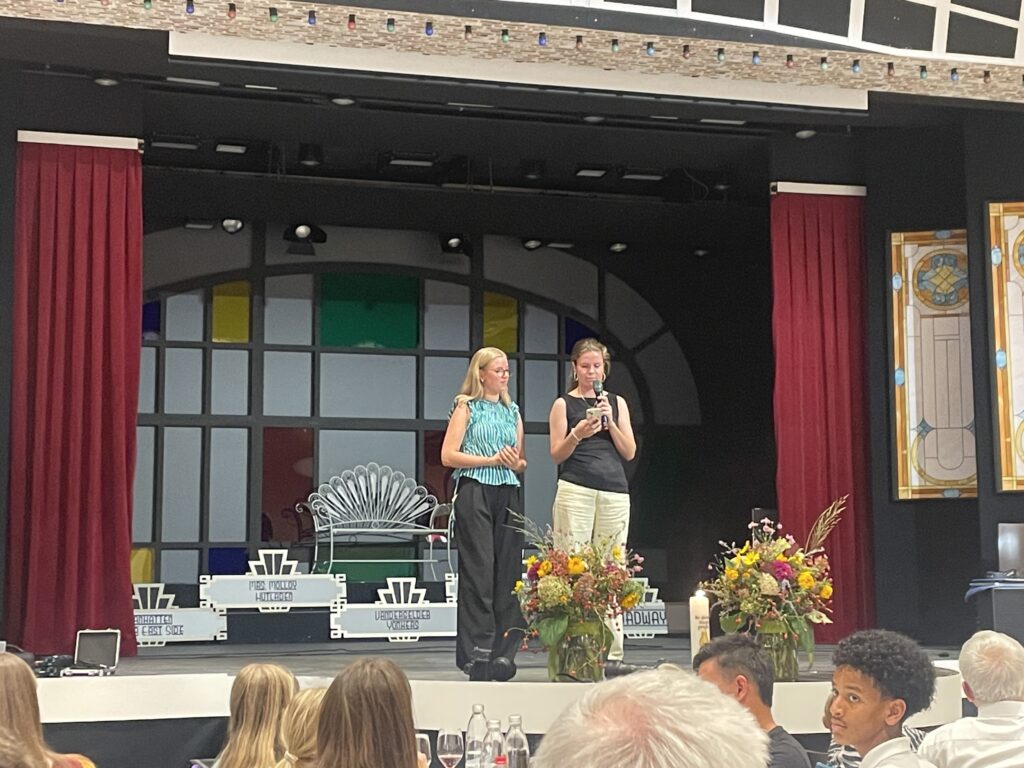
Tot slot kregen Sophie en Welmoed de 300 congresgasten stil met een inspirerende speech over de betekenis van de kerk voor hen als jongeren.
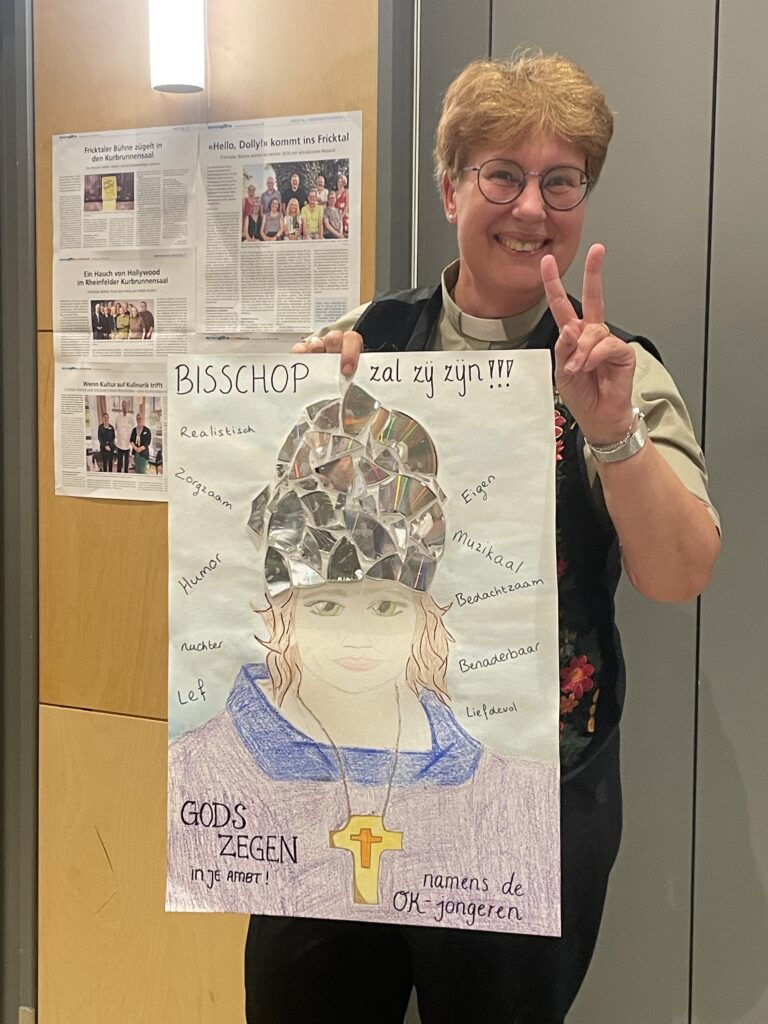
Ook boden de jongeren tijdens het diner een kunstwerk aan de nieuwe bisschop van Haarlem, Erna Peijnenburg, aan. Het werk toont een vrouwelijke bisschopsfiguur met een mijter van spiegel. Opdat ieder die ernaar kijkt (ongeacht welk geslacht of geaardheid) zichzelf mag herkennen in en gerepresenteerd mag voelen door haar ambt.
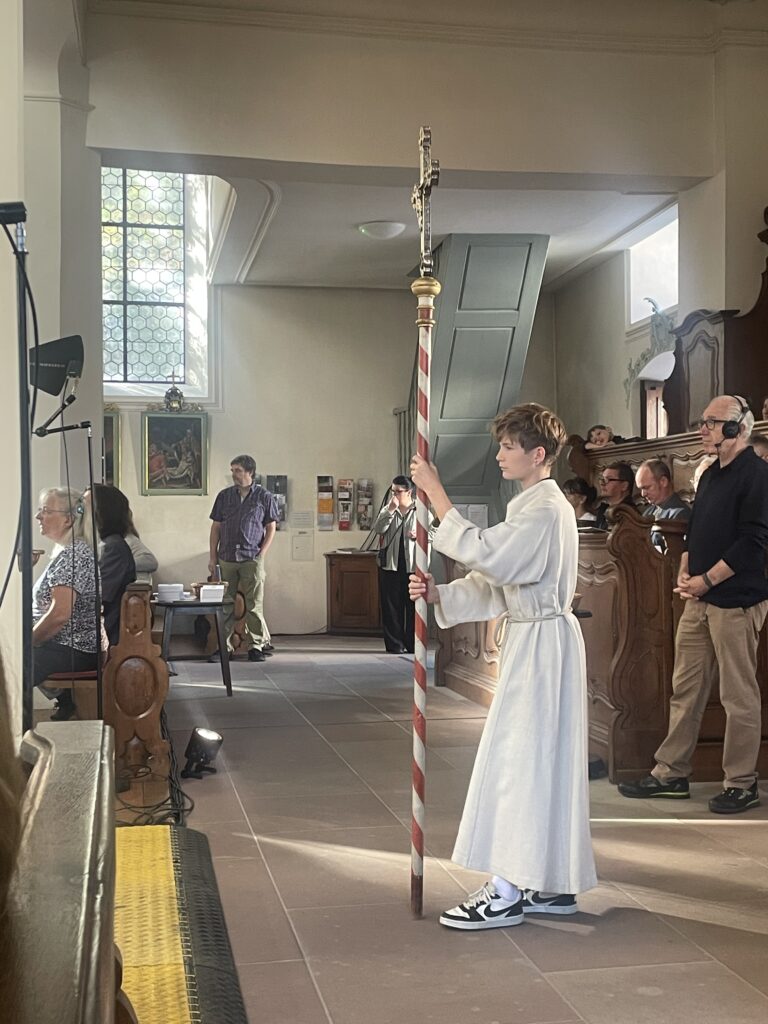
Op zondagmorgen volgde nog een viering die live werd uitgezonden op televisie. Wie de livestream terugkijkt, kan ook enkele jonge deelnemers spotten. Daarna volgde alweer de treinreis terug naar huis, waar ouders de jongeren alweer stonden op te wachten.
En nu is het dan weer vier jaar wachten op het volgende congres. Gelukkig zijn er veel nieuwe contacten gelegd en vriendschappen gesmeed en staat er ook alweer een reünie op de planning.
Ik hoop dat we de jongeren een mooie, gezellige en zinvolle ervaring hebben kunnen geven. Hun uitgesproken bijdragen aan de gesprekken en aan het congres in het geheel was inspirerend en ontroerend. Ik hoop vooral dat ze zich allemaal onderdeel hebben gevoeld van onze kerk, die zich niet tot onze landsgrenzen beperkt; en dat ze zich gewaardeerd weten en geliefd.
Want in de woorden van Sophie en Welmoed:
‘’When young people feel welcome, included, encouraged to share their ideas and connected to others, the church becomes more than just a place they visit. It becomes a place where they feel at home.’’
Tekst van de speech:
‘’Returning to our theme from this morning, we would like to talk about how important young people are to the church, and perhaps even more importantly: how important the church can be to young people.
We both grew up in the Old Catholic Church, and coincidentally in the very same parish. Looking back, we mostly remember a very carefree childhood. We were allowed to carry the candles, celebrated the holidays together, and sometimes secretly played hide-and-seek in the church. These might seem like small things, but those exact moments ensured that the church became more than just a building you visit on Sundays. It became a place that belongs to our youth and where we made memories.
And that is precisely why we feel it is so important to talk about young people today.
Young people are essential to the church. We are the new generation. Ultimately, we are the ones who will carry, organize, and pass on the church in the future. But that does not happen automatically. If young people do not feel connected to the church, it becomes increasingly difficult to pass on that faith and tradition.
That is why we find it so wonderful that there are young people present at this conference. Because when discussing the future of the church, we believe it is vital that young people are not just the topic of conversation, but are actually present in the room. After all, we are part of that future.
And that is why we are standing here today. We are the future, and future generations will have to build on what we do.
However, when we talk about youth and the church, we believe it is not just about what young people can offer the church. It is also about what the church has to offer young people.
For many, the church is a place to recharge and find peace. Every Sunday, people gather in the same place, each having had a completely different week.
We also go to church because we believe in God. But that is not the only reason. We have friends there who share our faith—people with whom we can talk, laugh, sing, pray, and read the Bible together.
And that is what makes the church so special to us. You do not have to do it alone.
Our weeks can be quite busy: school, work, appointments, sports, friends, and everything in between. Sometimes you spend the entire week rushing around with hardly any time to pause and ask yourself how you are actually doing.
And then comes Sunday at church.
A moment where you do not have to rush off to the next thing. You sit together, sing together, pray together, and listen together. It gives us a sense of connection.
Perhaps that is exactly what young people need so much today: a place where you do not have to perform.
At school, you are expected to get good grades. At work, you have to deliver. On social media, everyone seems to lead a perfect life. Meanwhile, as a young person, you are also trying to figure out who you are and what truly matters to you.
In church, all of that can fade into the background for a moment.
Everyone is equal there. Young or old, quiet or energetic, someone who has attended for years or someone who just walked through the door. Everyone is part of the same community.
And we find that beautiful. Because young people do not have to prove their worth to the church first—they are already important.
At the same time, we believe young people can bring something new.
We might look at the church differently than previous generations did. We are growing up in a different era and face different questions. That does not mean everything has to change, but young people can help the church move with the times.
A church that only looks backward may struggle to reach new generations. But a church that knows its traditions while making room for new ideas can, in our view, continue to grow. For us, church has become an integral part of our week. First, a busy week at school or work with everything it entails, and then Sunday begins with church. Coming together, taking a breath, and recharging before the new week starts.
Ultimately, maybe that is what the church can be for young people: a place to feel at home.
A place where you know people, where people know you, and where you can explore your faith alongside others. A place where you create memories, just like we did when we were younger, running through the building and playing hide-and-seek with our friends.
We hope that other young people can have that same experience. That they feel the church is not just something from the past, but something that can truly belong to them today.Because the future of the church does not rest on young people alone. It rests on young and old together.
The generations before us passed something down: faith, traditions, stories, and a community. It is up to us to take that, make it our own, and pass it on in our own way.So, if we ask ourselves how important young people are to the church, we would say: incredibly important. But perhaps we should simultaneously ask ourselves: how do we ensure that young people actually feel important within the church?Because when young people feel welcome, included, encouraged to share their ideas, and connected to others, the church becomes more than just a place they visit.
It becomes a place where they feel at home.
And that is ultimately what we hope the church can continue to be—for our generation and for the generations to come.’’
Link met officiele foto’s: https://www.picdrop.com/smartphotographie/gG7RhCsAqf